- Instructor: Barbara Wolff
- Lectures: 48
- Students: 55886
- Duration: 10 weeks
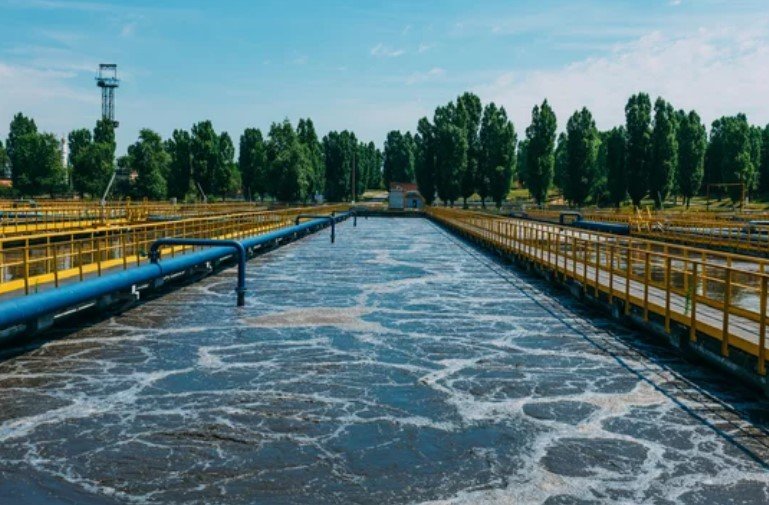
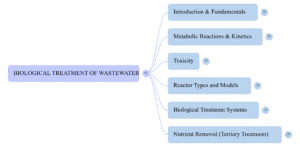
This course is an extensive overview of biological treatment of wastewater, detailing the fundamental principles, kinetic models, and various system configurations used in the process. It begins by explaining that this treatment method utilises microorganisms, primarily bacteria, to stabilise and remove biologically degradable substances. The text explores metabolic reactions (oxidation, synthesis, and endogenous respiration) and the environmental factors influencing bacterial population dynamics, before discussing growth kinetics using models like the Monod and Haldane equations, the latter of which accounts for toxicity and inhibition. Finally, the source offers a comprehensive look at different biological treatment systems, including aerobic processes (activated sludge and its modifications, trickling filters, and rotating biological contactors) and anaerobic treatment, concluding with a section on the biological removal of nutrients like nitrogen and phosphorus.
Biological Treatment of Wastewater Systems and Kinetics Course is based on textbook learning material by Academy Europe.
Study Hard AND Study Smart!
Dear Students,
The textbook courses by Academy Europe are targeted at providing the students with the most important aspects of the theoretical and methodical materials. In addition, the textbook courses will also focus on the philosophical background for the development and use of the theoretical background and are thus to be understood as partly complementary to the material of the course notes. It is assumed and strongly suggested that the students study and become familiar with the course notes.
Empower Academy Europe
Join Academy Europe social media channels on Youtube, Facebook, Linkedin, Twitter and more. Share and like them by using your social media accounts.
Facebook: www.facebook.com/academyeurope
Twitter: https://twitter.com/academyeurope
Youtube: www.youtube.com/c/academyeurope
Linkedin: https://www.linkedin.com/company/academy-europe/
Certification
Academy Europe presents high-quality formal diplomas, certificates and e-certificates which are formal proof and recognition of accredited online courses. It shows all student’s abilities to learn and achieve high results and is very useful to promote personal career including with CVs, job applications and self improvements.
Samples: Horizantal Diploma – Horizantal Certificate – Vertical E-Certificate


How can you get your certificate at Academy Europe?
- You must click “complete” link at the end of every lesson of your course after you finish them.
- When you finish all lessons of course, the “finish course” link is going to be active at the end of last lesson.
- When you click the “finish course” link, you will finish your course on Academy Europe officially. Then, “certificate” page of you completed course will be automatically active.
- You can see and download your certificate online after you click on your “certificate” link.
Audience
This course by Academy Europe aims at imparting quality education and training to students.
Academy Europe is dedicated to its students, their specific learning requirements, and their overall learning success.
This course is directed toward a student-centered, independent study, asynchronous learning approach.
After completing this course on Academy Europe, students will get self improvement and promotion in their careers.
This course is based on at least two learning skills which are provided to the users through audio & visuals, videos, verbal presentations and articles, all of which are asynchronized with distance education approach.
Prerequisites
Before you start proceeding with this course on Academy Europe, we are assuming that you have a good aptitude and can think logically. You should want to try something different.
Ideal candidates for the course would typically possess:
– Discipline and attentiveness
– Ability to conduct research
– Ability to perform tasks with speed, efficiency, and accuracy
– Analytical judgment
– Patience to interpret technical/scientific data
– A willingness to learn, roll up your sleeves and work toward your dream!
– A computer, tablet or smartphone and an internet connection
– Basic computer skills
Curriculum
- 8 Sections
- 48 Lessons
- 10 Weeks
- Introduction1
- An Introduction to Biological Reactors in Wastewater Treatment7
- 2.1Introduction
- 2.21.0 The Foundation: How Microorganisms Clean Water
- 2.32.0 The Two Major Families of Aerobic Reactors
- 2.43.0 Fixed-Film Reactors: Where Biomass Stays Put
- 2.54.0 Suspended-Contact Reactors: Where Biomass is in Motion
- 2.65.0 Anaerobic Reactors: Working Without Oxygen
- 2.76.0 Conclusion: Matching the Reactor to the Task
- Briefing on Biological Wastewater Treatment9
- 3.1Executive Summary
- 3.21. Core Principles of Biological Treatment
- 3.32. Metabolic Processes and Growth Kinetics
- 3.43. Mechanisms of BOD Removal
- 3.54. Toxicity in Biological Systems
- 3.65. Reactor Design and Operational Parameters
- 3.76. Aerobic Biological Treatment Systems
- 3.87. Anaerobic Treatment Systems
- 3.98. Biological Nutrient Removal
- Lecture Notes: Principles and Applications of Biological Wastewater Treatment7
- 4.11.0 Introduction to Biological Wastewater Treatment
- 4.22.0 The Science of Microbial Metabolism and Growth Kinetics
- 4.33.0 Managing Toxicity in Biological Systems
- 4.44.0 Reactor Design and Operational Principles
- 4.55.0 A Survey of Biological Treatment Systems
- 4.66.0 Advanced Topic: Biological Nutrient Removal
- 4.77.0 Key Terminology and Cited Works
- Optimisation of Biological Wastewater Treatment Processes: A Practical Guide for Engineers and Operators7
- 5.11.0 Fundamentals of Biological Wastewater Treatment
- 5.22.0 Core Metabolic Reactions and Process Kinetics
- 5.33.0 Key Operational Parameters for Process Control
- 5.44.0 Analysis of Aerobic Biological Treatment Systems
- 5.55.0 Anaerobic Treatment Processes: Design and Operational Considerations
- 5.66.0 Managing Toxicity and Inhibitory Loads in Biological Systems
- 5.77.0 Strategies for Biological Nutrient Removal (BNR)
- A Comparative Analysis of Aerobic and Anaerobic Biological Systems for Industrial Wastewater Treatment7
- 6.11.0 Introduction to Biological Wastewater Treatment
- 6.22.0 Core Principles of Microbial Metabolism and Growth
- 6.33.0 An Examination of Aerobic Treatment Systems
- 6.44.0 An Examination of Anaerobic Treatment Systems
- 6.55.0 Comparative Analysis for Industrial Technology Selection
- 6.66.0 Decision Framework for Technology Selection
- 6.77.0 Conclusion
- The Hidden World of Water Treatment: How Microbes Clean Our Wastewater6
- 7.1Introduction: The Unseen Cleanup Crew
- 7.21. Meet the Cleanup Crew: A Microscopic Ecosystem
- 7.32. The Microbial Buffet: How Microbes ‘Eat’ Pollution
- 7.43. The Life Cycle of a Microbe Colony
- 7.54. Putting It All Together: Managing the Microbial Workforce
- 7.65. Conclusion: The Unsung Heroes of Clean Water
- Study Guide for Biological Treatment of Wastewater4

Requirements
- Discipline and attentiveness
- Ability to conduct research
- Ability to perform tasks with speed, efficiency, and accuracy
- Analytical judgment
- Patience to interpret technical/scientific data
- A willingness to learn, roll up your sleeves and work toward your dream!
- A computer, tablet or smartphone and an internet connection
- Basic computer skills
Features
- Before you start proceeding with this course on Academy Europe, we are assuming that you have a good aptitude and can think logically. You should want to try something different.
Target audiences
- This course by Academy Europe aims at imparting quality education and training to students.
- Academy Europe is dedicated to its students, their specific learning requirements, and their overall learning success.
- This course is directed toward a student-centered, independent study, asynchronous learning approach.
- After completing this course on Academy Europe, students will get self improvement and promotion in their careers.
- This course is based on at least two learning skills which are provided to the users through audio & visuals, videos, verbal presentations and articles, all of which are asynchronized with distance education approach.