
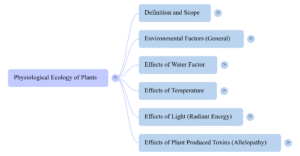
Mind Map
When we look at a field of wildflowers or a dense forest, we often see a peaceful, static landscape. But beneath this tranquil surface lies a constant, silent war for survival. Plants are not passive organisms; they are active and strategic participants in a relentless battle for resources like sunlight, water, and nutrients. One of their most sophisticated and effective strategies is a form of chemical warfare, where they produce and release potent chemical compounds to influence, inhibit, and even kill their competitors.
This fascinating idea is not new. As early as 1832, the botanist A. P. De Candolle observed that certain plants seemed to harm their neighbors, noting that thistles appeared to inhibit the growth of oats and that rye seemed to have a similar effect on wheat. This early observation was a glimpse into the complex chemical interactions that define plant communities. To truly understand this hidden battlefield, we must first look at the classic cases that brought this silent war to light.