
- Instructor: Barbara Wolff
- Lectures: 43
- Students: 89697
- Duration: 10 weeks
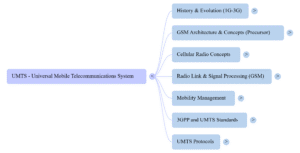
This course provides an extensive quick guide to mobile communication systems, specifically focusing on the evolution from First Generation (1G) analog systems through to the Universal Mobile Telecommunications System (UMTS) and its enhanced versions like HSPA and EDGE. The text meticulously outlines the history and fundamental cellular concepts, such as frequency reuse, fading, and handovers, using Global System for Mobile communication (GSM) as a primary example. Furthermore, it details the complex network architectures of GSM and its packet-switched upgrade General Packet Radio Service (GPRS), including the functions of components like the Mobile Switching Center (MSC) and Home Location Register (HLR). Finally, the guide covers the technical objectives and security protocols of UMTS, examining the Evolved Packet Core (EPC) network architecture and associated signaling protocols like GPRS Tunneling Protocol (GTP) and Extensible Authentication Protocol (EAP), all within the framework of 3GPP standardization.
Course is based on textbook learning material by Academy Europe.
Study Hard AND Study Smart!
Dear Students,
The textbook courses by Academy Europe are targeted at providing the students with the most important aspects of the theoretical and methodical materials. In addition, the textbook courses will also focus on the philosophical background for the development and use of the theoretical background and are thus to be understood as partly complementary to the material of the course notes. It is assumed and strongly suggested that the students study and become familiar with the course notes.
Empower Academy Europe
Join Academy Europe social media channels on Youtube, Facebook, Linkedin, Twitter and more. Share and like them by using your social media accounts.
Facebook: www.facebook.com/academyeurope
Twitter: https://twitter.com/academyeurope
Youtube: www.youtube.com/c/academyeurope
Linkedin: https://www.linkedin.com/company/academy-europe/
Certification
Academy Europe presents high-quality formal diplomas, certificates and e-certificates which are formal proof and recognition of accredited online courses. It shows all student’s abilities to learn and achieve high results and is very useful to promote personal career including with CVs, job applications and self improvements.
Samples: Horizantal Diploma – Horizantal Certificate – Vertical E-Certificate


How can you get your certificate at Academy Europe?
- You must click “complete” link at the end of every lesson of your course after you finish them.
- When you finish all lessons of course, the “finish course” link is going to be active at the end of last lesson.
- When you click the “finish course” link, you will finish your course on Academy Europe officially. Then, “certificate” page of you completed course will be automatically active.
- You can see and download your certificate online after you click on your “certificate” link.
Audience
This course by Academy Europe aims at imparting quality education and training to students.
Academy Europe is dedicated to its students, their specific learning requirements, and their overall learning success.
This course is directed toward a student-centered, independent study, asynchronous learning approach.
After completing this course on Academy Europe, students will get self improvement and promotion in their careers.
This course is based on at least two learning skills which are provided to the users through audio & visuals, videos, verbal presentations and articles, all of which are asynchronized with distance education approach.
Prerequisites
Before you start proceeding with this course on Academy Europe, we are assuming that you have a good aptitude and can think logically. You should want to try something different.
Ideal candidates for the course would typically possess:
– Discipline and attentiveness
– Ability to conduct research
– Ability to perform tasks with speed, efficiency, and accuracy
– Analytical judgment
– Patience to interpret technical/scientific data
– A willingness to learn, roll up your sleeves and work toward your dream!
– A computer, tablet or smartphone and an internet connection
– Basic computer skills
Curriculum
- 8 Sections
- 43 Lessons
- 10 Weeks
- Introduction1
- Briefing Document: Evolution and Architecture of Mobile Cellular Networks8
- 2.1Executive Summary
- 2.21. The Evolution of Mobile Communication Generations
- 2.32. Fundamental Cellular Network Principles
- 2.43. GSM (2G) Network Architecture
- 2.54. The GSM Radio Link and Security
- 2.65. Mobility Management in Cellular Networks
- 2.76. UMTS (3G) Network and Technology
- 2.87. The Evolved 3GPP System: Towards an All-IP Network
- Academic Lecture Notes7
- 3.11.0 Introduction: From Analog Voice to the All-IP Network
- 3.22.0 Module 1: Foundational Cellular Concepts
- 3.33.0 Module 2: The Second Generation (2G) – The GSM Revolution
- 3.44.0 Module 3: The Evolution to Packet Data (2.5G) – GPRS and EDGE
- 3.55.0 Module 4: The Third Generation (3G) – The UMTS Paradigm Shift
- 3.66.0 Module 5: The Evolved Packet System (EPS) Architecture
- 3.77.0 Module 6: Core Protocols and Signaling in Modern Mobile Networks
- The Evolution of Mobile Networks from 1G Analog to 3G UMTS6
- 4.11.0 Introduction: Charting the Path of Mobile Communication
- 4.22.0 The Foundation: Core Principles of Cellular Networks
- 4.33.0 First Generation (1G): The Dawn of Analog Mobile Voice
- 4.44.0 Second Generation (2G): The Digital Revolution with GSM
- 4.55.0 The Bridge to 3G: Packet Data with GPRS and EDGE (2.5G)
- 4.66.0 Third Generation (3G): The UMTS Mobile Broadband Era
- Core Architecture and Protocols of the UMTS Framework7
- 5.11.0 Introduction: The Strategic Evolution to an All-IP Mobile Network
- 5.22.0 The Evolved 3GPP System Architecture: E-UTRAN and EPC
- 5.33.0 Analysis of the Evolved UMTS Terrestrial Radio Access Network (E-UTRAN)
- 5.44.0 Deconstructing the Evolved Packet Core (EPC)
- 5.55.0 Core Protocols Enabling UMTS/EPC Functionality
- 5.66.0 Strategic Considerations: Interworking with Legacy Systems
- 5.77.0 Conclusion: Key Architectural Takeaways for Network Strategy
- How Cellular Networks Work: A Beginner's GuideConcept Explainer - Introduction: The Problem of Crowded Airwaves Imagine trying to give every single person in a city their own private radio channel to make phone calls. This was the fundamental challenge facing the creators of mobile communication. Early mobile systems relied on single, high-power transmitters that could cover a wide area, but they could only serve a very limited number of customers because of a severe shortage of available radio frequencies. This is known as the Frequency Scarcity Problem. To put this into perspective, if a single radio call requires 50 kHz of bandwidth, serving 100,000 subscribers with their own dedicated channels would demand an astonishing 5 GHz of bandwidth—a practically impossible amount. A new, more intelligent approach was needed to use our limited airwaves more efficiently. That ingenious solution is the "cellular concept."4
- From Sparks to 3G: The Story of Mobile CommunicationTechnology history - To our ancestors, the idea of sending messages through the air would have seemed like magic. But in 1895, Guglielmo Marconi made that magic real with his wireless telegraph, sparking a revolution in how we connect with one another. That initial spark ignited a journey of innovation that would eventually lead to the powerful mobile devices we carry in our pockets today. This document will guide you through the first three major stages of that journey. We will explore the evolution from bulky, analog car phones to the dawn of the mobile internet, explaining the key advancements and crucial differences between the first three generations of mobile technology: 1G, 2G, and 3G.6
- UMTS and Cellular Concepts Study Guide4

Requirements
- Discipline and attentiveness
- Ability to conduct research
- Ability to perform tasks with speed, efficiency, and accuracy
- Analytical judgment
- Patience to interpret technical/scientific data
- A willingness to learn, roll up your sleeves and work toward your dream!
- A computer, tablet or smartphone and an internet connection
- Basic computer skills
Features
- Before you start proceeding with this course on Academy Europe, we are assuming that you have a good aptitude and can think logically. You should want to try something different.
Target audiences
- This course by Academy Europe aims at imparting quality education and training to students.
- Academy Europe is dedicated to its students, their specific learning requirements, and their overall learning success.
- This course is directed toward a student-centered, independent study, asynchronous learning approach.
- After completing this course on Academy Europe, students will get self improvement and promotion in their careers.
- This course is based on at least two learning skills which are provided to the users through audio & visuals, videos, verbal presentations and articles, all of which are asynchronized with distance education approach.